


51st Highland Division Monument
The 51st Highland Division and Ross Bequest Trust handed over the monument to the Clan Donnachaidh Society.
MoreAnyone with even a drop of Scottish blood in their veins surely feels some affinity to, and some pride or at least interest in, that part of their ancestry. Along with the centuries and the many centres of educational excellence which produced Scotland's great scientists, engineers, soldiers, explorers and world famous thinkers, this rugged and often breathtakingly beautiful country also gave birth to, and long nurtured, a very special social and cultural treasure: the Clan system.
Clan, meaning "children" in the old Gaelic tongue, referred originally to a close-knit family by blood, but later to a larger and essentially social group. These groupings date back even to prehistoric times. A combination of passionate loyalty to, and the protection provided by, a strong leader, in a defined and sometimes quite narrow geographical area, usually with natural mountain or river boundaries, over the centuries led most people in the area to follow - and eventually when surnames first became common adopt the family name of - that very strong leader. This was the Clan Chief.
The Clan system was historically at its most powerful in the Highlands: that huge north west and most mountainous part of Scotland, where Gaelic was the traditional language. Here the major social unit was the Clan, at least until the Union of the Scottish and English crowns in 1603, after which the Stuart kings and then - much more brutally - the Hanoverian monarchs of the United Kingdom sought to and succeeded in diminishing the historic patriarchal authority of the Clan Chiefs and integrating them into wider society.

However, in contrast to that loss of authority - accelerated as it was by the failure of the great 18th century Jacobite risings, which were supported by many of the Chiefs, to defeat the Hanoverian monarchy - it was the mass emigration which followed that failure and the ensuing cruel suppression of all elements of Scottish (and particularly Highland Scottish) culture, traditions and language, which ensured that those very same elements, except for the Gaelic tongue, spread out across virtually the whole of the English-speaking world, and even further afield.
Today it is the Clan Societies, and their often world-wide memberships, which not only remain loyal to their Chiefly families but also keep alive that wonderful traditional spirit of family pride and togetherness, and indeed Scotland's instantly recognisable cultural identity.
The 51st Highland Division and Ross Bequest Trust handed over the monument to the Clan Donnachaidh Society.
More
What a wonderful gathering this year. Thanks so much to those that worked so hard to organise it again and ma
More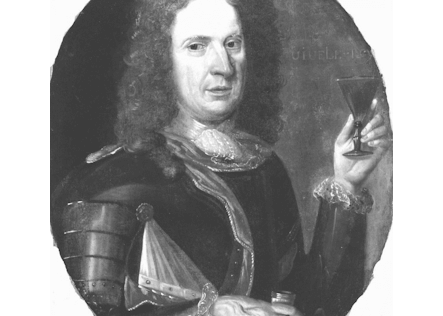
Alexander Robertson, the famous "Poet-Chief" of Clan Donnachaidh, was born about the year 1670.
More
Discover the history of the society and it's connections to the Clans around Perthshire.
More