
Warfare
The old two-handed sword of the sort wielded by Wallace and Bruce is the claidheamh da laimh. The later, basket-hilted, lighter, doub
MoreTraditionally lairds and chiefs measured their wealth and importance in the number of armed men in their tails. After the '45 this was irrelevant. Power became synonymous with money and this came from rents. Sheep and improved agriculture yielded more than people. During the latter half of the century, many lairds made efforts to bring each township into a single tenancy. Until then they might collect rent in labour and kind from three or four in each clachan who in turn were paid by their subtenants.
Tenants' superfluous sons joined the Highland Regiments. Forming these had been a stroke of genius by the government. The bagpipes, the kilt, tartan, the broadsword and all weapons were banned - except in the service of his Majesty. In the Highland regiments and only in the Highland regiments could the young Gael enjoy, like his honoured forefathers, the warrior culture and all its trappings. At least fifty thousand young Highlanders, who would in other times have been warriors in the tails of their chiefs and lairds, were siphoned off to fight for the crown in the Americas and in Britain's colonial wars of the nineteenth century.
With the suppression of his culture after the '45, the Highlander found that time hung heavily on his hands and he developed a taste for theological disputation. Dugald Buchanan who came as a teacher to Rannoch in 1755 found its inhabitants to be licentious heathens and converted them through his pious example and preaching. By the time of his death, the old stories round the peat fires at ceilidhs had been joined by dogged and dogmatic religious arguments while sects flourished and withered with the passing seasons. A dozen mile walk to church on Sunday was quite acceptable, but parts of Rannoch were twenty miles or more as the crow flew or the Highlander tramped - up one side of a mountain and down the other because it only added on the miles to go round.
Four times a year, in rotation in each parish church, was held the Great Event or the Occasion when communion was offered to thousands of folk from all over Atholl. Dressed in their best clothes and harangued by relays of preachers, they made a long week end of it, and there are moving accounts of the hymn singing of such vast concourses of humanity echoing off the crags and lochs. The lairds chose the parson, his Grace of Atholl having the greatest say. This was at the root of the Disruption of 1843 when the seceders walked out of the General Assembly to form churches whose ministers were chosen by the congregation. Lord Breadalbane, the great Campbell magnate whose seat was on the Atholl border at Taymouth, was a strong supporter of the Free church. He and other lairds gave land so that the new chapels and meeting houses could be built, but most of the proprietors gnashed their teeth at the erosion of their power.

Highlanders had always kept goaty little sheep similar to today's St Kildas but the so-called great sheep - akin to the modern Blackface - came to these straths in about 1770 and so did the potato. The former produced a greater return than Highland tenants and land was cleared for them. As in Ireland, the latter allowed more people to live on the restricted holdings. Another reason for the population increase came from the introduction of inoculation. Smallpox was the most readily fatal of the myriad of diseases that culled half the children before they reached adulthood. More quickly than in the Lowlands, Gaels realised the value of the remedy and took to it with enthusiasm.
The old standards of agriculture were lamentable. Seed was saved from grains not worth eating; ploughs were wooden and needed a gang of five men and two ponies to operate them; each year lots were drawn to decide who would farm what land for the year, which gave no incentive to invest in fertility if it would be farmed by someone else the following season. Lairds began to introduce agricultural reforms but, even where the great sheep were not taking over the higher farms, better agriculture gave employment to fewer people.
Towards the end of the century the Highlands began to be fashionable. James Macpherson produced a volume of poems purporting to be by the ancient Gaelic writer Ossian and these took Europe by storm, even becoming Napoleon's preferred campaign reading. Rousseau introduced the concept of the Noble Savage which fitted the Highlander admirably. Dr Johnson met Flora MacDonald who had helped Prince Charles to escape and published his account of the meeting and his tour of the Highlands in 1775. The courage of the Highland regiments in the British army attracted the admiration of the world. The penal legislation introduced after the '45 was lifted in 1782, but a generation had passed and folk were unaccustomed to the old ways.
The old two-handed sword of the sort wielded by Wallace and Bruce is the claidheamh da laimh. The later, basket-hilted, lighter, doub
More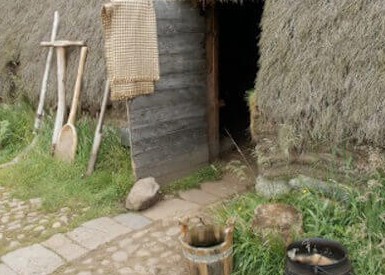
As you advance north across the Tay at Dunkeld, you are entering Atholl. The name, originally Athflota, means New Irelan
More
What a wonderful gathering this year. Thanks so much to those that worked so hard to organise it again and ma
More

The Lairds of Clan Donnachaidh at the Battle Of Culloden in Support of the Jacobites
More
Clach na Brataich is a legendary stone with historical significance in Scotland and associated with Clan Robertson.
More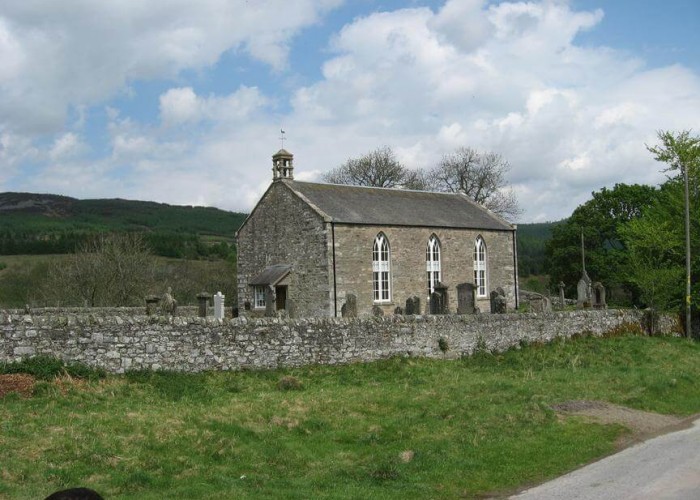

300 years ago the hillsides were dotted with little townships huddled round a good spring or well.
More
This poem was a contribution to the Ceilidh at the Gathering in 1975 by Jock Reid of the London Branch
More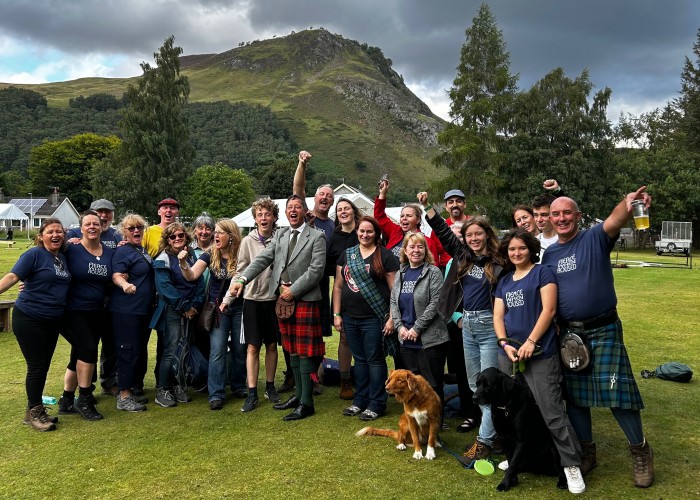
It was wonderful to meet up with so many members and supporters – both locally and from overseas
More