
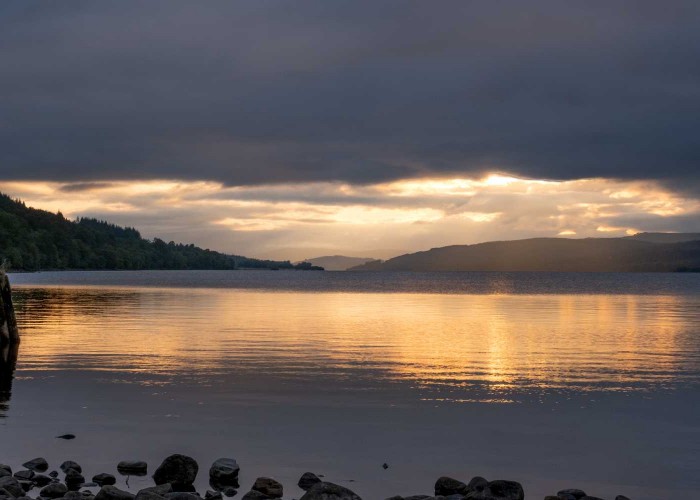
Rannoch
The village of Kinloch Rannoch was created in the period after the '45. It is a nomenclatural oddity.
MoreRevisionism has taken place here as well. Over the centuries many tales have been woven about the dozen 'forts' scattered at strategic points through its thirty six miles. Fingalian, certainly, and probably the capital of Fingal himself from where he could send his troops to any point of Scotland should danger threaten. Excavation has shown that these were occupied by peaceful farmers.
The glen seems endless. Round one corner the mountains close in on the road and the river, round the next there is half a mile between them. Although there are few possible stopping places to appreciate them, the glen is full of legendary stones, hummocks and castles. Meggernie Castle, half way up, was built by the Campbells, occupied by them for one century and then by the Menzieses for two.
Now the glen seems wild and empty but once it was home to over a thousand folk and on one of the best trodden thoroughfares between the western Highlands and the east. And so busy a place is laden with tales of centuries of clan battles, of saints, of deeds of valour and of treachery.
Perhaps the most notorious resident was Captain Robert Campbell of Glenlyon. He was a gambler and a drunk. His debts cost him his estates and forced him, at the age of sixty in 1690, to join the army. The Highlands were in chaos. William of Orange was trying to impose his authority; ex-king James was trying to rally his support from exile in France. The Scottish magnates like Atholl, Breadalbane and Argyll were manoeuvring for power and influence with the new regime, retaining links with the old regime in case the revolution failed and using every possible means to damage their rivals. The Highland chiefs were doing the same with more violence and less subtlety. Not a cow north of Stirling was safe from thieves, often the Macdonalds of Glencoe. In the midst of this were government armies and Jacobite armies, usually plundering to survive and sometimes starving to death when the countryside could yield nothing. It was a time of cynicism, cruelty, avarice and dishonour.
The King's Secretary Dalrymple hated the chiefs, being exasperated with their petty plottings and their inability to keep their word. With the intention of terrifying them into submission, he composed the document, signed by William, ordering the extirpation of the Glencoe Macdonalds whose chief, MacIain, had been late in swearing his oath of allegiance. With varying degrees of enthusiasm, the fatal orders were passed down the chain of command.
On February 1st 1692 Glenlyon and his company had been billeted in the snow-bound glen, a way of levying tax on people unable or unwilling to hand over cash. Campbell was a cousin of Lord Breadalbane and related to half the Atholl gentry. His niece was married to MacIain.
He and his men lived peacefully amongst the Macdonalds for eleven days. Then on 12th February he received his instructions. At 5am the following morning he was 'ordered to fall upon the rabelle, the Macdonalds of Glencoe, and to putt all to the sword under seventy'. Glenlyon's two subordinate officers refused to carry out the command; they were arrested and sent to Glasgow. Others amongst his men were reluctant and some warned the intended victims. But the killings began. Campbell himself bayonetted one bound prisoner and supervised the rest of the murders 'in frozen despair'. Perhaps 45 were killed, including two children under five. About the same number died of exposure fleeing over the mountains from the butchery but the majority took shelter with their neighbours - particularly the Stewarts of nearby Fasnacloich and, the Macdonalds assert, the family of Campbell of Airds at Castle Stalker. Glenlyon himself displayed drunken remorse round the alehouses of Edinburgh until he was posted to Flanders to avoid the subsequent enquiry where he died in 1696. Mythology claims that the massacre was Campbell against Macdonald but this is untrue. It was the government trying to crush the unruly clans.
John Campbell, Robert's son, inherited a truncated estate through his mother at the mouth of the glen with its mansion house at the edge of Fortingall. The family was never typical of its clan in its politics. A soldier by profession, John was a Jacobite who brought out his tenants for King James in the Rising of 1715 and afterwards fled to France, returning to Fortingall by 1730. His eldest son was with the Black Watch on the Continent during the '45 Rising, so Archie Roy, a fifteen year-old younger son, commanded the men of the estate in the rebel army and was halfheartedly chased round the glen by his soldier sibling after Culloden.
This eldest son, known as the Black Colonel, stayed in the army. In America shortly before the Revolution, he was in command of a firing squad. The condemned marine was reprieved but Campbell was ordered to delay announcing the pardon until the prisoner was on his knees, blindfolded, in front of the execution party. Taking the reprieve from his pocket Campbell inadvertently pulled out his handkerchief which was the signal to the squad. They shot the prisoner. The colonel, understandably aghast, clapped his hand to his forehead and exclaimed 'The curse of God and of Glencoe is here: I am a ruined man.'
The last Campbell laird of Glenlyon was a doctor, much loved and respected in the locality, who died in 1805.
The village of Kinloch Rannoch was created in the period after the '45. It is a nomenclatural oddity.
More
Situated in the central part of Scotland, Strathtummel is within easy reach of highland Perthshire, home to historical sites and
More
Along the north face of the strath between Logierait and Aberfeldy are eleven estates whose boundaries have been largely unchanged
More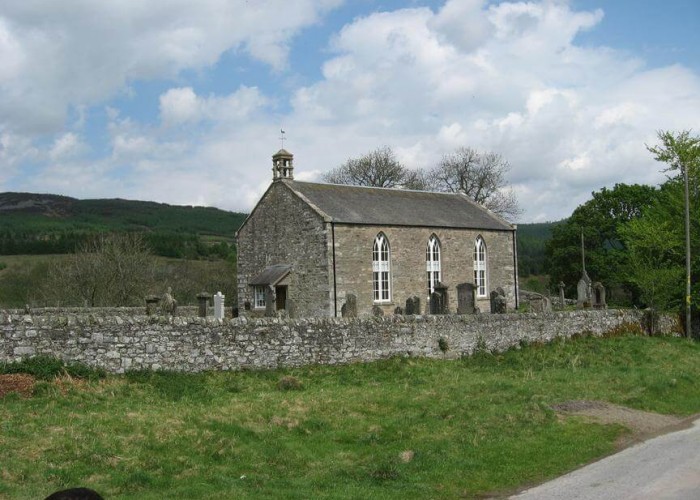

The film location of the fictional stone circle called Craigh na Dun, where Claire travels back in time.
More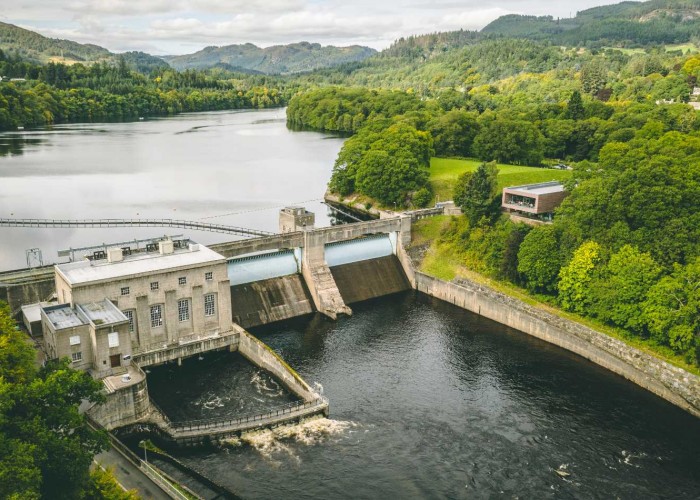
Pitlochry has kept pace with the times. Thousands come from all over the world to make this one of the most important stops on the
More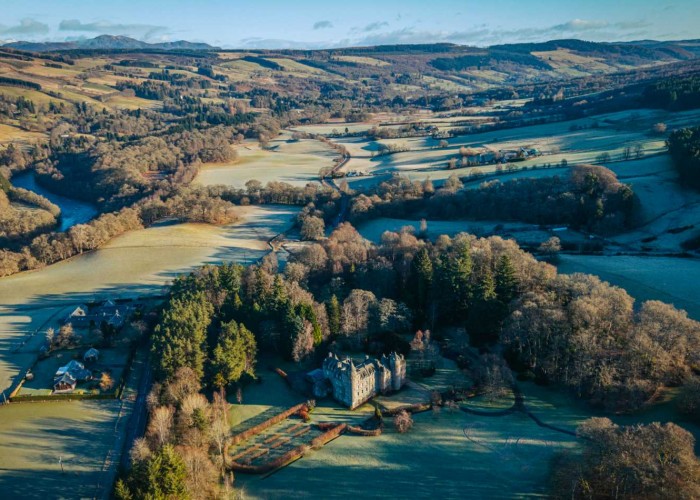

St Mary's Chapel in Grantully near Aberfeldy with a magnificent 1600s painted ceiling
More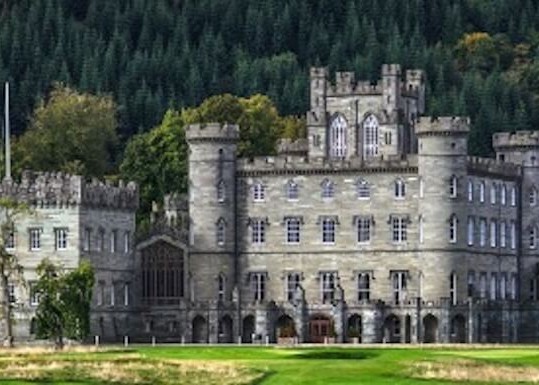
The spectacular Gothic edifice of Taymouth Castle is one of the grandest buildings in Scotland. Most was completed in 1807 by
More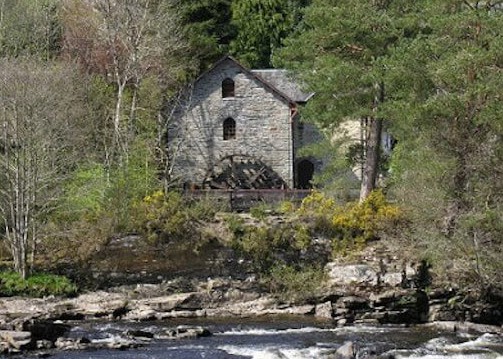
Much of what is now called Breadalbane used to be in Atholl but the incoming Campbells of Glenorchy took the name as the title of
More
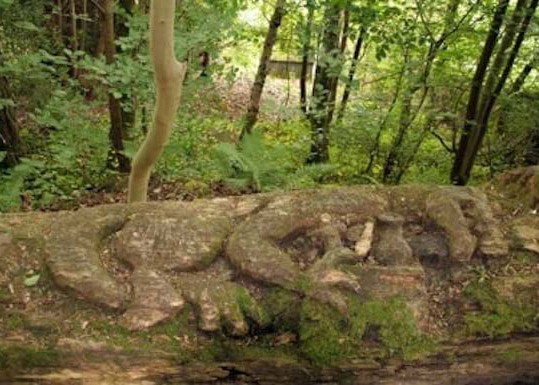
The name comes from the word 'uamh' in Gaelic which means cave. The caves are in the wooded crags above the village
More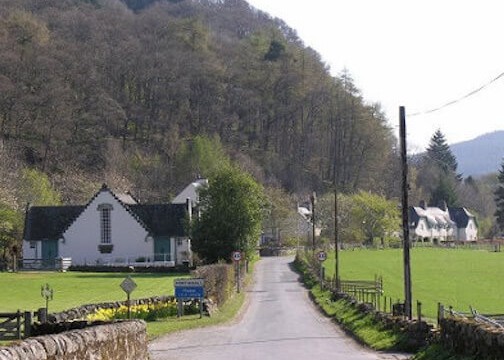
Recently crop marks have been observed much closer to the village and, although confirmation is still needed, they show signs of b
More
Dunalastair and the estate is home to rare wildlife of Perthshire with offers scenic strolls around famous gardens
More
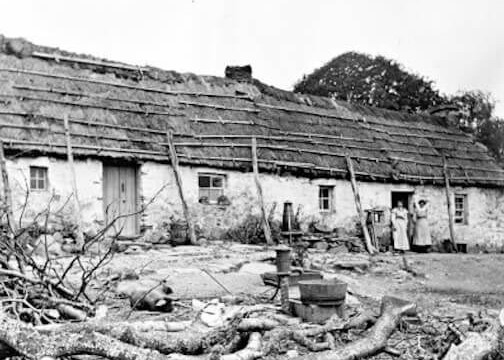

Some appreciate Highland Perthshire as no more than one of the most beautiful parts of Scotland.
More
The chiefs of Clan Menzies used to have their seat at Comrie Castle on the south bank of the river Lyon
More
Dunkeld and its cathedral were saved by the Dukes of Atholl. They were the law across 500 square miles of the Highl
More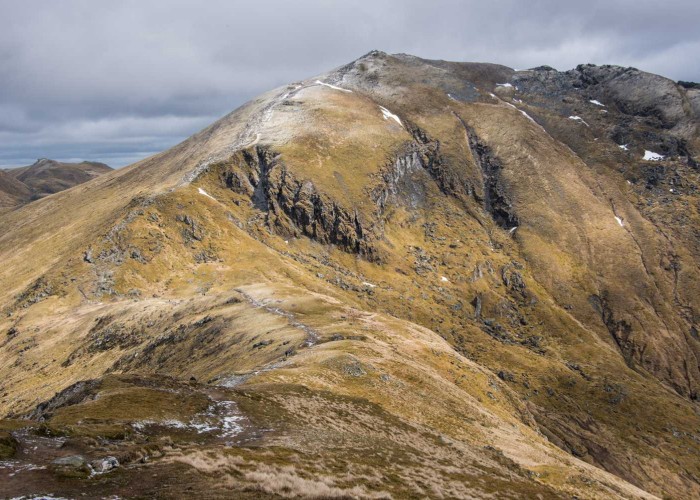
In the last few summers, Glasgow University archeologists have been exploring the mountain and have discovered t
More
Once fortifications would have covered the site of Garth Castle but now only the central keep remains
More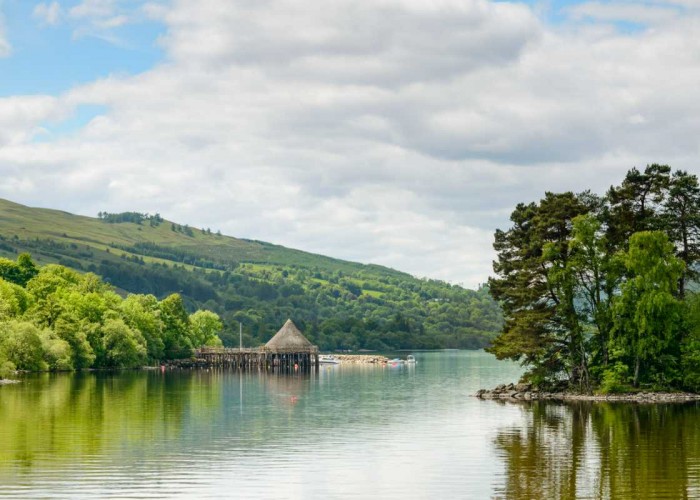
This, Scotland's sixth biggest loch, covers six and half thousand acres in its 14 miles between Kenmore and Killin. For thousan
More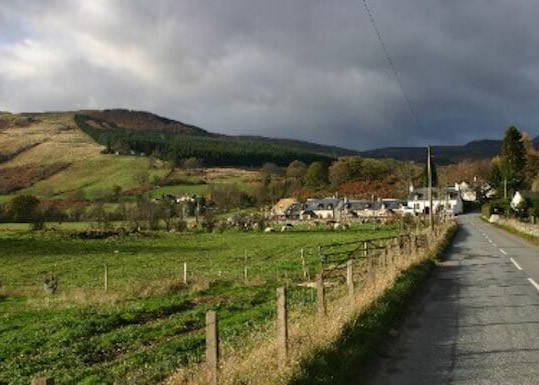
The statue to David Stewart of Garth, erected by the Stewart Society in 1925, in the uniform of a Black Watch captain
More
The double stone circle of Mary's Croft, an impressive standing stone monument in highland Perthshire
More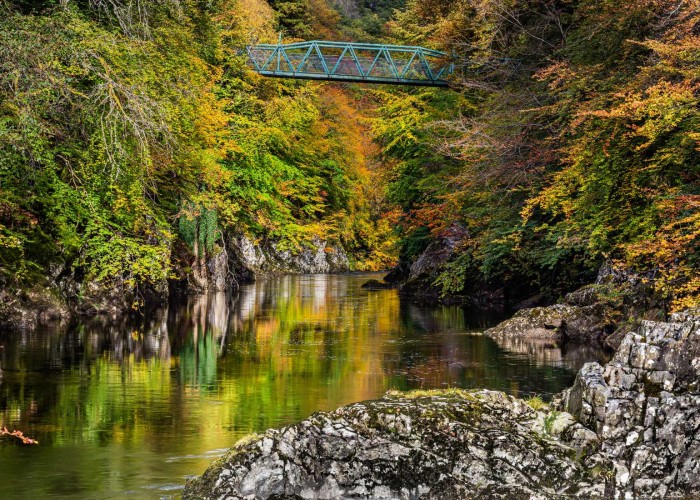

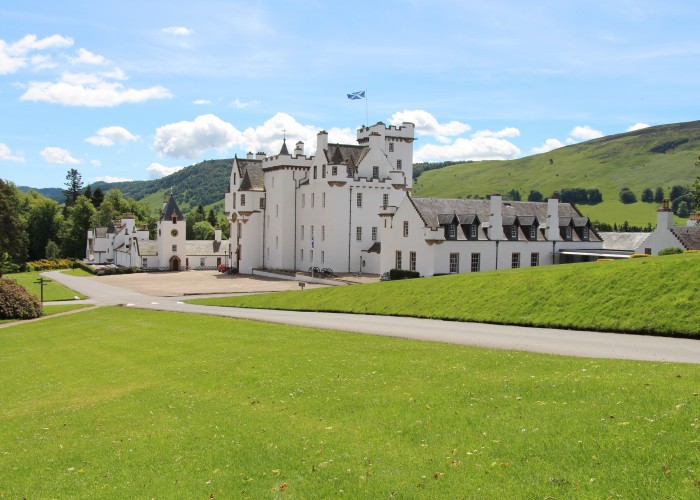

Aberfeldy is what used to be called a thriving market town. The market has long closed but the town still thrives.
More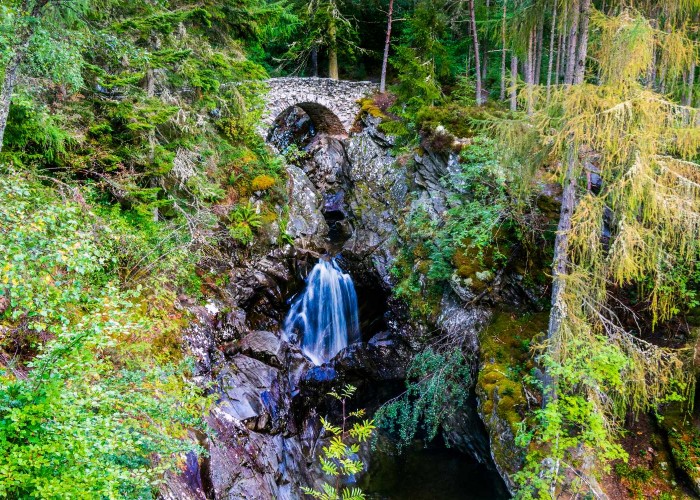
The site of the clan centre at Bruar is at the base of one of those spectacular gorges carved through soft rock by a burn in spate
More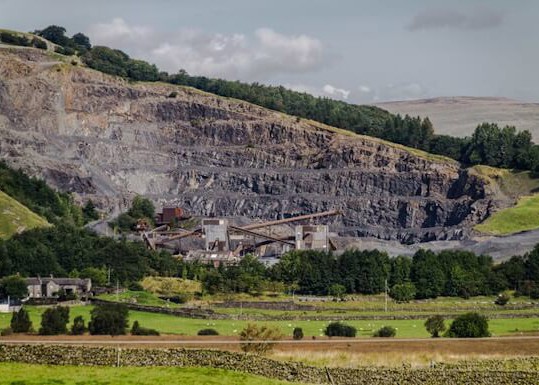
The history behind Shierglas Quarry - Set back the busy A9 road, connecting the south and north of Scotland.
More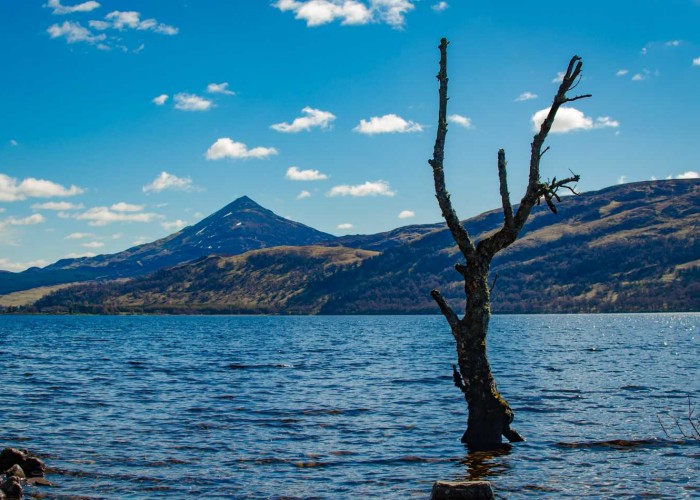
Like an island, the peak of Schiehallion stood above the ice. The millennia of frost left the shattered boulders and scree that
More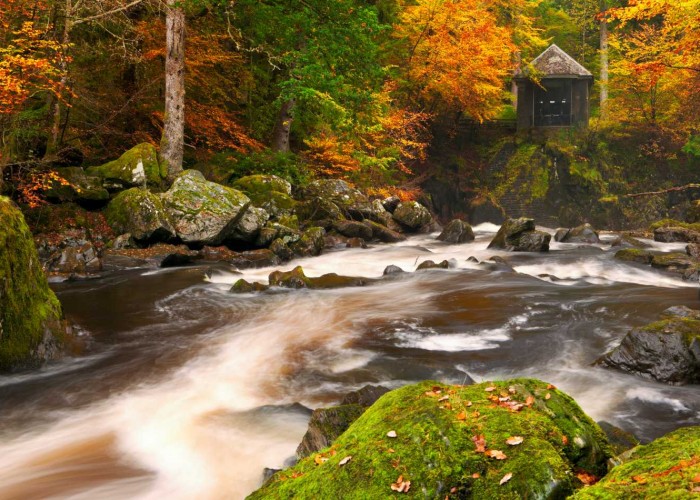
The building contained a chandelier and its walls were lined with mirrors reflecting the falls of turbulent river which was int
More
The castle, in private hands, dates from the late 1600s but doubled in size early this century.
More